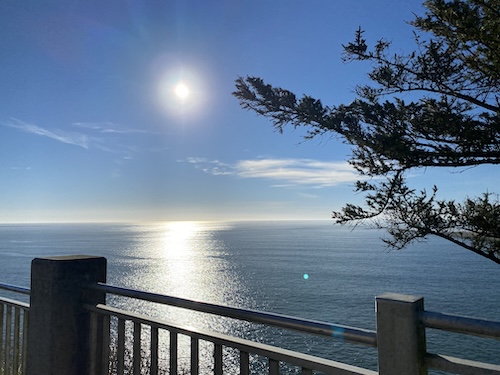
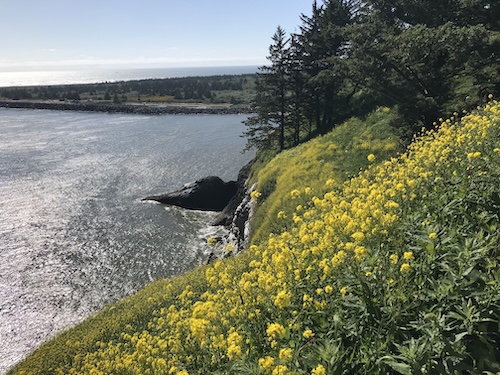
Growing up in the Pacific Northwest, David and I have spent our lives learning about the Lewis and Clark Expedition. We’ve visited the Lewis and Clark Interpretive Center at Cape Disappointment high on the bluffs outside of Ilwaco, Washington, many times. The views out over the Pacific Ocean are beyond incredible.

The Lewis and Clark Corps of Discovery in the Pacific Northwest
For the 200th anniversary of their journey, the area in Washington and Oregon where the Corps had travelled had a wonderful celebration that included a living history re-creation.
On this cold, rainy, wet, miserable November day, we visited the interpretive center where the walls are covered in large copies of excerpts from their journals. Two hundred years to the day, they wrote they had been suffering through the same kind of cold, wet, miserable day and had been for several days. As we headed back out to our nice, warm car to go to a nice, warm, dry hotel room, we realized how fortunate and spoiled we are.
We saw the “salt cairns” in Seaside, Oregon, where they boiled seawater to get salt to preserve their food. There was also a post office table set up where we were able to get cancelled stamps commemorating the expedition.
We watched a re-creation of the group crossing the mighty Columbia River between Washington and Oregon in canoes. We visited Fort Clatsop, just outside of Astoria, Oregon, where re-enactors educated us and taught kids how to trade items, such as vegetables for beads.
The Lewis and Clark Expedition had a major impact on this country.
So, while there is a lot of information about their time in the PNW, there really wasn’t anything taught about what happened after they headed back east. But David knew that Merriweather Lewis had supposedly taken his own life. Now, when you hear that, you think, “Oh, that’s so sad,” and pretty much forget about it and move on.
However, we say he “supposedly” killed himself because, well, the story might very well be just that – a story or even a cover story.
The Meriwether Lewis Site on the Natchez Trace Parkway
When we traveled to Chattanooga, Tennessee, for a conference we realized we would be close to the site where Lewis died. So, we knew we had to take a little side trip on the way home and see it for ourselves.
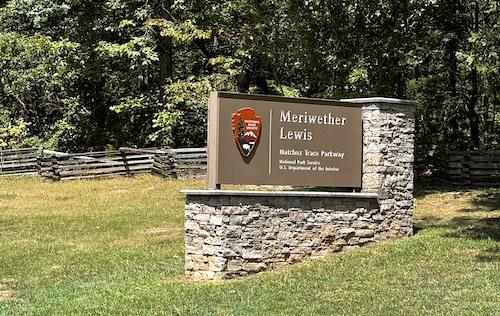
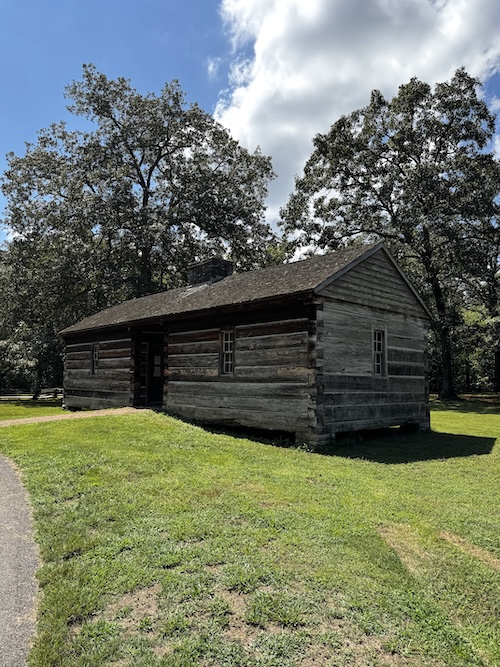
A beautiful drive through the countryside took us to the site of the Meriwether Lewis section of the Natchez Trace Parkway, operated by the National Park Service and the U.S. Department of the Interior.
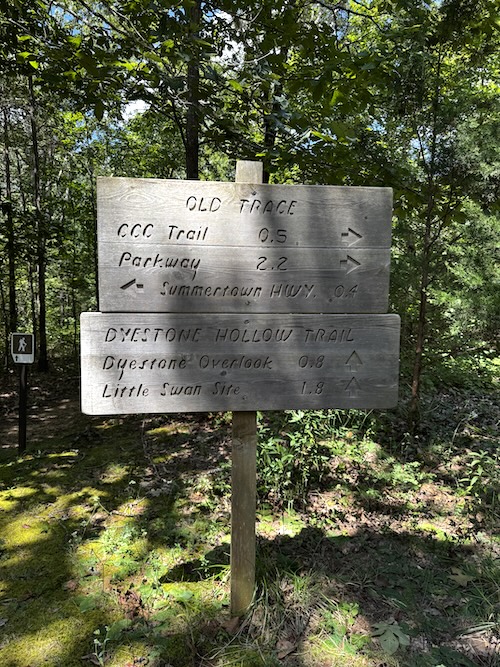
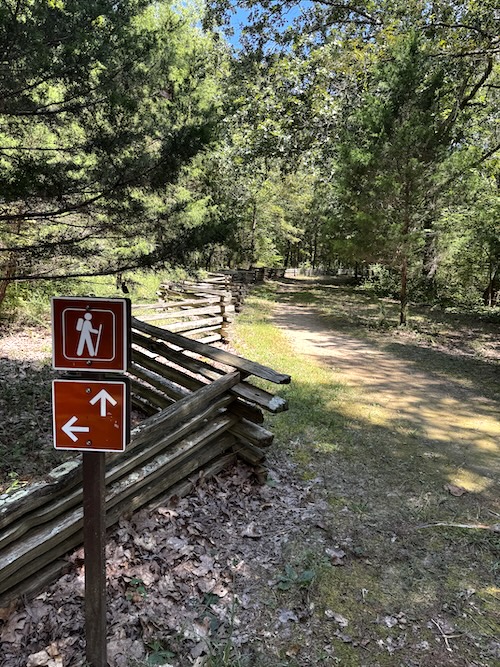
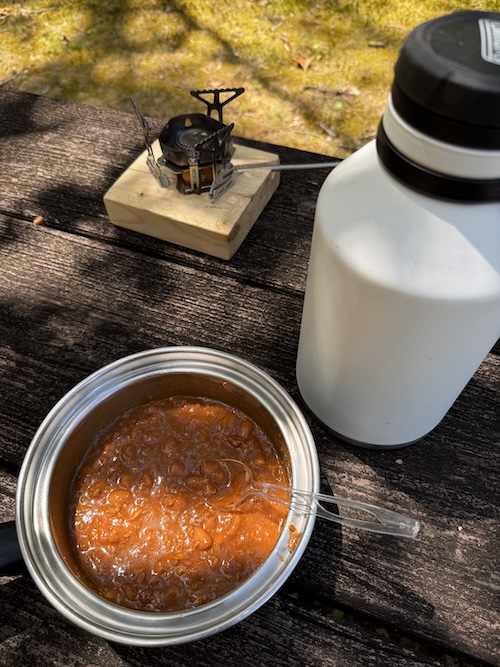
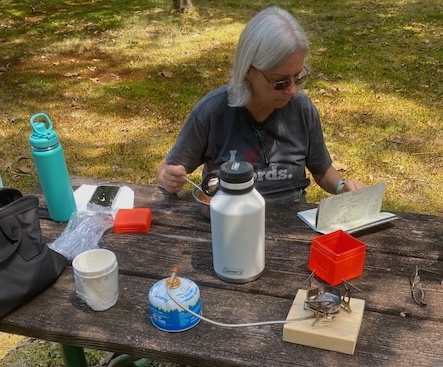
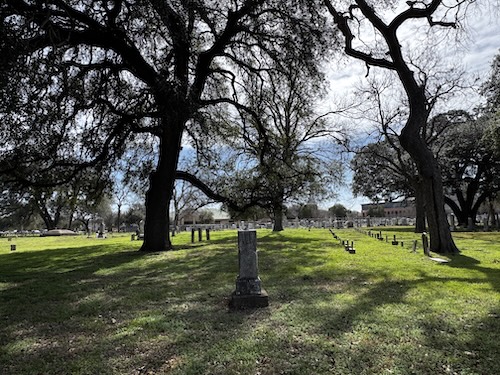
The memorial site is beautiful and serene, with walking trails and a picnic table where we made our lunch. There is also a campground, a visitor center with exhibits (in a building meant to re-create the Grinder House), and restrooms. The visitor center closes for the winter starting in November each year, so check the website to confirm the date.
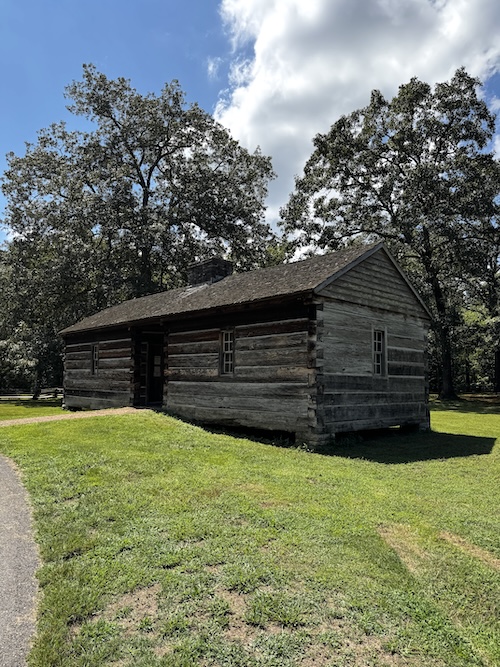
You’ll want to be sure you eat or bring a picnic lunch and have a full tank of gas before heading to the Trace, as there are little to no services for a long way. The website also lists any other closures along the Trace that might detour you from your planned route.
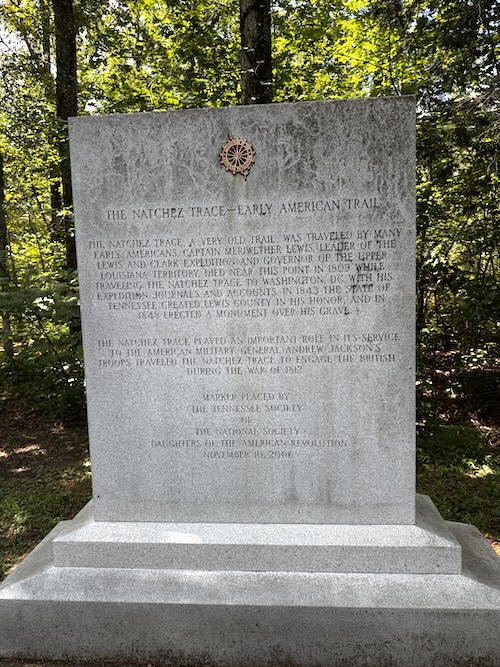
Meriwether Lewis on the Natchez Trace
Lewis was born in 1774 in Virginia and died on October 11, 1809, at what is known as “The Grinder House.”
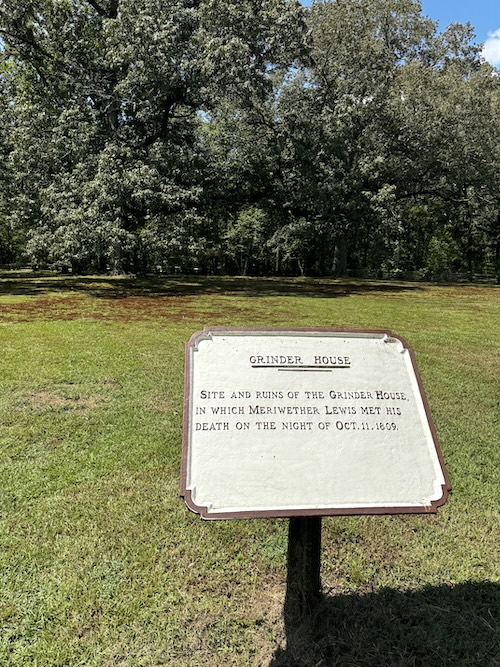
While the official story is suicide, there are several references that question the validity of the manner of his death. One of the plaques in front of his memorial says that he died “tragically and mysteriously”.
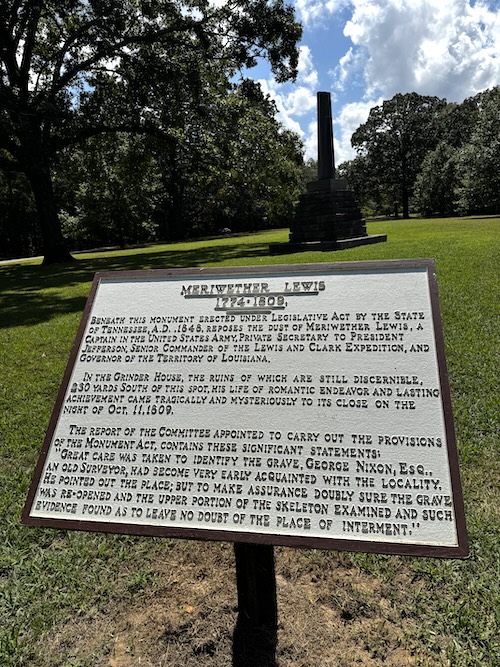
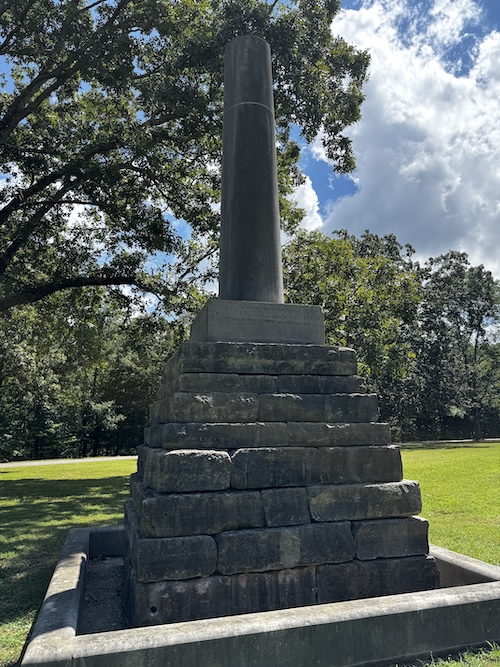
The visitor center holds a variety of displays. You can read various parts of the story that seem to explain it, but then they start to raise questions in your mind as you critically think about them.
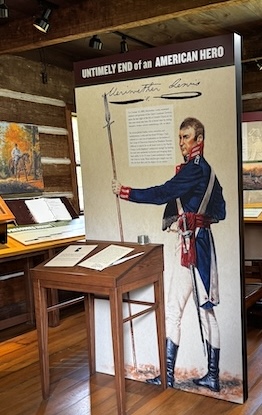
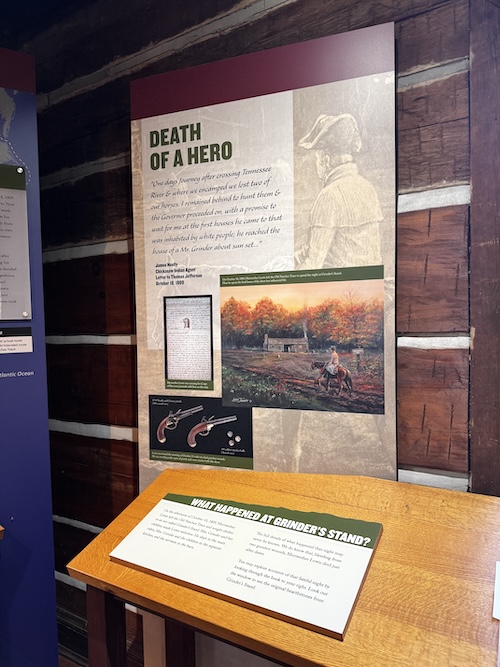
The Official Story
The story is that Lewis was traveling to Washington, D.C., to deliver his journals and to protest non-payment of money due to him. Apparently, he was initially going to travel to New Orleans and go by boat to D.C. but became worried about the British in the area and didn’t want his journals falling into their hands, so he decided to take the Trace instead.
He traveled with companions, a Chickasaw agent who would escort him through the area, and a servant, until they reached an inn known as the Grinder house. Mr. Grinder was gone, but Mrs. Grinder and her children were there. She made dinner for Lewis, then he went to bed. Mrs. Grinder later stated that Clark was acting very strangely and that she could see him through the spaces in the logs, talking to himself and pacing back and forth. Then she heard a gunshot. Then she heard an “Oh Lord!” and then another gunshot. She was afraid to go in and check on him, so she waited until daylight. Even then, she didn’t go into his room but instead went out to an outbuilding where the agent and the servant had slept, to have them come in and check on Lewis. He was still alive with a gunshot wound to the chest and to the head but died hours later.
The Questions About Lewis’ Death
So now we have some questions: Why would he kill himself if he was worried about his journals falling into the wrong hands? Would most people be able to shoot themselves a second time? If Mrs. Grinder could see through the spaces between the logs, wouldn’t she have seen more? Why the long wait to go and check on him? Wouldn’t someone in a “normal” situation have gone out and notified the other two men immediately? Or did she know what happened and was hoping he’d die?
There are thoughts that he was possibly murdered because he didn’t get along with Frederick Bates, the Secretary of the Louisiana Territory, and that maybe he was actually going to D.C. to report on Bates’ corruption. Today’s courts would certainly consider that a motive for murder.
Will We Ever Know the Truth?
Apparently, the National Park Service was asked for permission to exhume Lewis’ body in 1996 to examine it, but they refused. That just begs more questions. Why would they refuse? What harm would it do? Is there something they are afraid will be revealed? Is there a cover-up? And if so, who orchestrated it? And who would still be protecting it today? At what gain?
Sadly, we will likely never know the true story of the death of Meriwether Lewis. A man who served our country in such a special way deserves better than that.
The Meriwether Lewis site is located at milepost 385.9 on the Natchez Trace, near Hohenwald, Tennessee.



Leave a Reply