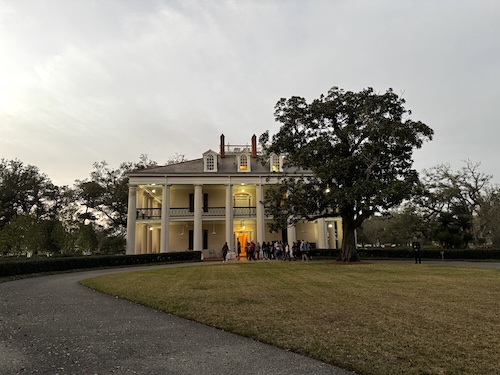
Grand homes, white columns, and beautiful oak trees lining a walkway are often the images in our minds when we think of plantations. Obviously, many of our views were shaped by “Gone with the Wind” more than anything else, particularly those of us who have never experienced them.
Growing up in the Pacific Northwest, we knew about plantations, of course, and a little bit of their role in history and the Civil War. But that was about it. You tend to know more about the history of your own area than others. That’s very normal. So travel is a great way to learn more.
We were very excited to have had the opportunity to tour three plantations just outside of New Orleans, Louisiana, during a recent trip with the Southern Travelers Explore conference. There are many more in the Louisiana River Parishes, but this is all we had time to visit during this trip. We soon realized that in these historic places, the story is not one-size-fits-all. Each site chose a distinct way to interpret its past.
Why Plantation Tours Can Tell Very Different Stories
Not all plantations interpret history the same way. Some focus on architecture and preservation. Some focus on agriculture and its contribution to the economy. Some focus on the lives of the enslaved. So, pay attention not just to the physical buildings and artifacts you see, but to the stories behind them all and how those stories are presented. None of them are “right” or “wrong,” and they all help us learn and realize that if we visit one, it doesn’t represent them all.
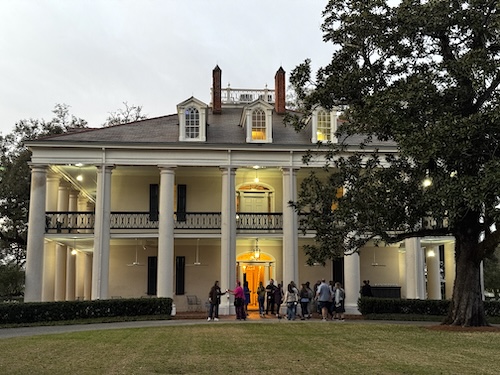
Plantation One: Oak Alley Plantation
The Grandeur of the Plantation Home
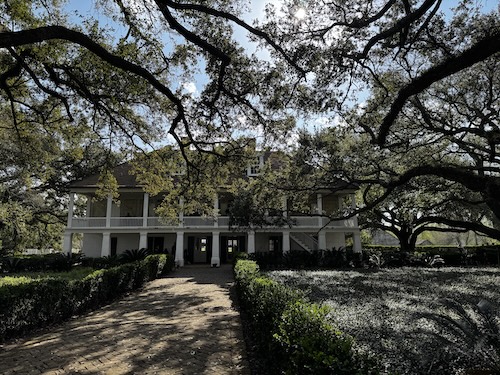
The first one we visited was Oak Alley Plantation, a sugar plantation. The “big house” at Oak Alley was exactly the kind of home that those of us unfamiliar with the variety of plantations expect. Obviously, with a name like that, there were large, expansive Oak trees (28 of them!) lining the walkway from the house out to the road. A stunning two-story mansion with white columns, carefully maintained. Inside was just as impressive. Rich wood, expensive furniture, chandeliers. Absolutely gorgeous.
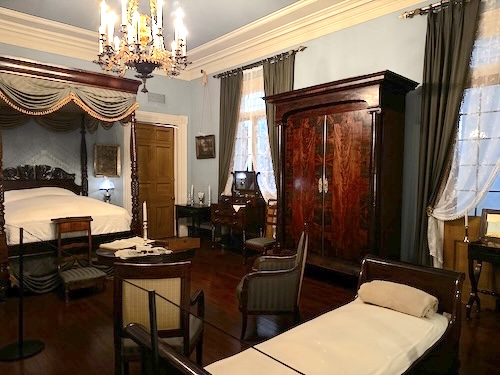
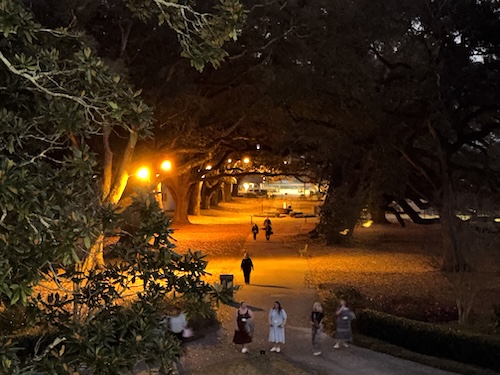
Admittedly, there is more to see, but we were only there for the evening and didn’t get to explore the rest of the property. The website contains a more thorough story, which is more than the stunning house, but due to its beauty it can’t help but appear as the star of the show.
Plantation Two: The Laura Plantation
The Plantation Story Through the Family Perspective
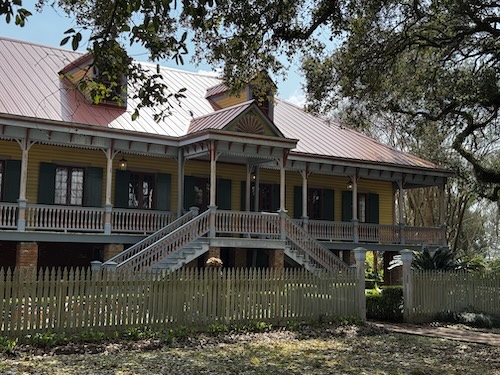
The next day we visited the Laura Plantation, another sugar plantation. Our tour guide, Joseph Dunn, was extremely knowledgeable. He warned us – “You might hear some hard things.” We all kind of expected something like that, but he went beyond our expectations. Of course, we knew of the heartbreaking stories, such as selling and separating parents from children, of hard work, of whole families crammed in small houses. It was difficult to see the list of names of the enslaved and the “value” placed on them.
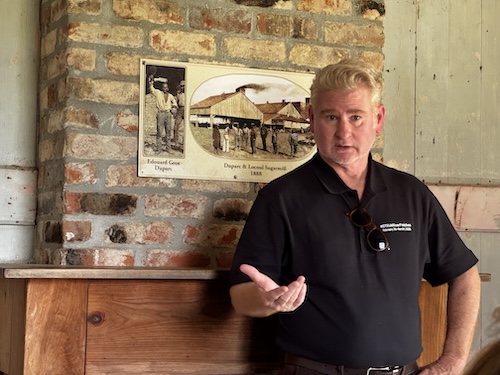
But Joseph pointed out something that was more surprising – “No one’s hands were clean,” he said. He went on to explain that people often judge plantation owners, but that they don’t realize that places like the city of New Orleans were built by the enslaved and that the Catholic church was the largest owner of enslaved people. There has always been an impression that the North played no role in this system, but the big banks loaned the money to the plantations to buy and to insure the enslaved people.
This time, we had the opportunity to tour the grounds as well. We saw the enslaved quarters and learned how the politics of the time influenced laws, expectations, and behaviors. Joseph talked about primary document research that helped contribute to the story of this land and home. He truly presented one of the best tours we’ve ever been on, with the deepest, most historically researched information we’ve ever heard.
As for the “big house,” it wasn’t nearly as opulent as Oak Alley. Yet it felt more comfortable, a little less “stuffy.” Smaller, not as “polished.” But well-maintained.
We saw photos of previous owners, learned more about their lives and their thoughts. We learned about Laura Locoul, who grew up on the plantation which was eventually named after her. Laura, who rebelled against the accepted norms of the time regarding slavery, wrote a book of her memories for her children. This book, called Memories of the Old Plantation Home: A Creole Family Album, revealed the story of the house, the land, the property, the economics, the lifestyle, the culture, and the family strife over the business in a much deeper way. The plantation was an agricultural business where the family members “worked” and what they considered their “home” was in the French Quarter in New Orleans.
Plantation Three: The Whitney Plantation
The Lives of the People Who Lived and Labored Here
Finally, we visited the Whitney Plantation. The “big house” is smaller than Oak Alley and a little larger than the Laura. The outside is well maintained and still quite stunning, but the inside is mostly empty with a feeling of minimal restoration. However, this is understandable since the focus is solely on the enslaved and their lives here.
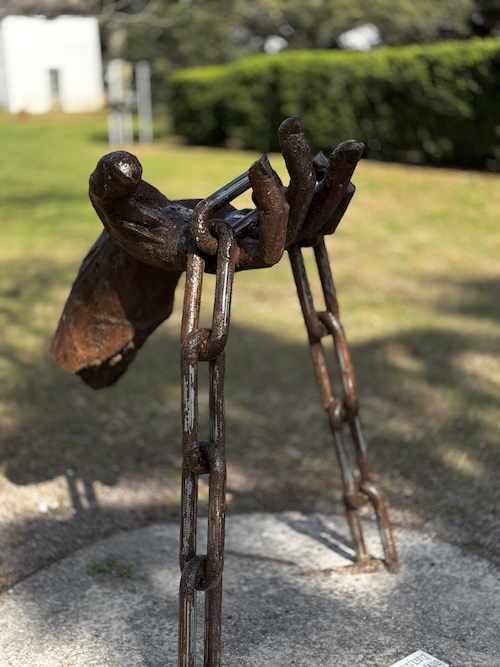
The tour is a self-guided audio tour. We received a “ticket” which was a photo badge to hang around our neck. Each photo represented an enslaved child, which immediately reminds us of the very human and real aspect of this story.
As with the other plantations, the story is supported by research with historical documents.
The preservation efforts are rightfully concentrated on the enslaved quarters, as it is the focus of the museum. Two of the cabins were still lived in until 1975. Other buildings include a church, a blacksmith shop, and many other original structures.
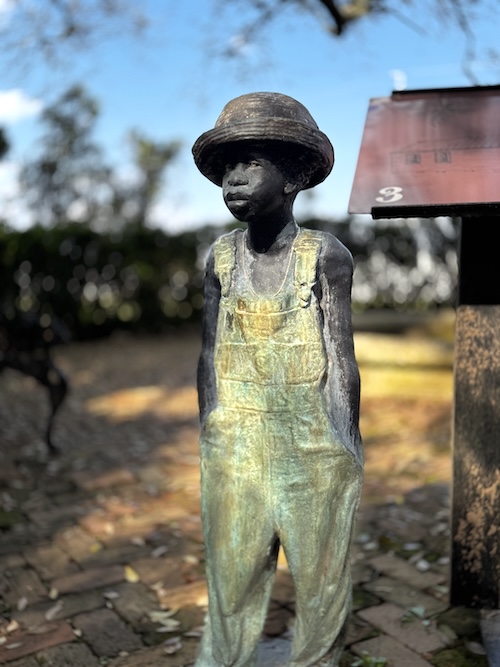
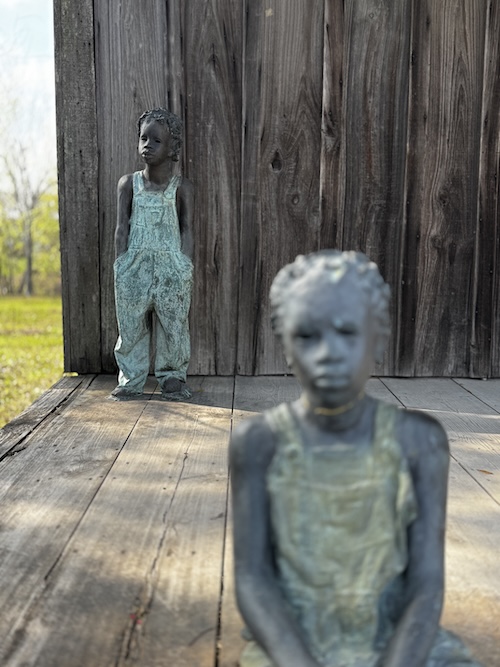
Focusing on the lives of the enslaved allows for a deeper story that many people may have never heard. This may dramatically change the emotional and educational impact of this piece of history for you.
Why Visiting More Than One Plantation Matters
Three Places, One Complex History
Plantation visits can be powerful learning experiences when we approach them with an open mind. Each site offers a piece of a larger historical puzzle. The story is much more complicated than the newspaper headlines and the political quotes. The more perspectives we see, the better we understand the past.
Oak Alley Plantation
3645 Highway 18
Vacherie LA 70090
The Laura Plantation
2247 Highway 18
Vacherie, LA 70090
The Whitney Plantation
5099 Louisiana Hwy 18
Wallace, LA 70049


Leave a comment