The road dropped out of sight in front of us. We could see it continued somewhere out ahead, but it looked like we were about to drive over a cliff. David pressed forward, while I just shut my eyes and prayed.
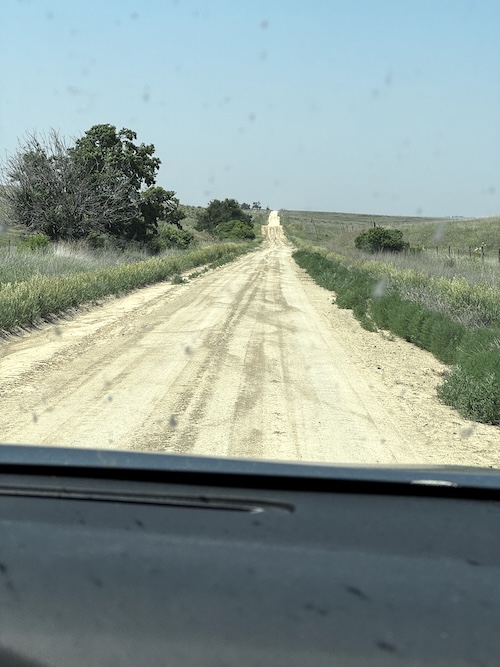
Nope, the road didn’t drop off, it was just steep. Whew! But it did have me re-thinking our little side-trip to look for family headstones.
We were on our way to an event, and the backroads led us very near where I knew my mom’s side of the family had lived and died in Kansas and Nebraska. I felt the strong calling to try to find them.
Heritage travel can – and should! – include finding your family roots by visiting gravesites. The connection you feel seeing something tangible representing them is powerful.
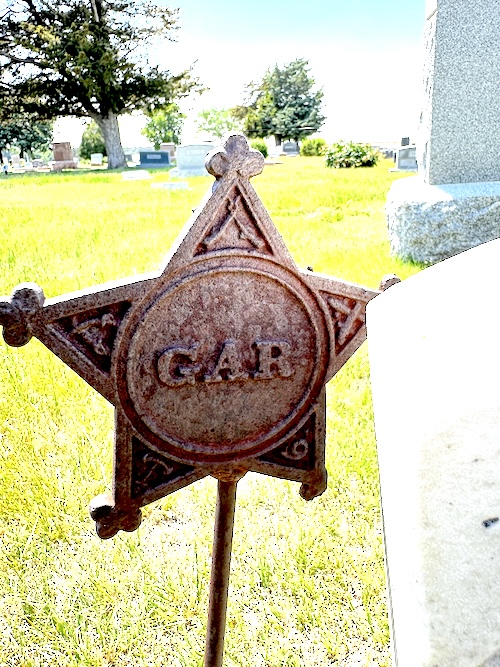
I had visited many family gravesites in the Pacific Northwest, so now it was important to me to see these other relatives in an area I never thought I’d have a chance to visit. There were two headstones in particular that I wanted to see. My great-great-great grandfather, James Hazerel Wycoff was killed in the Civil War at the Battle of Helena, Arkansas, on July 4, 1863. News of his loss reached home about three weeks later, right around the time his one and only child, a son was born. James is buried in Memphis, Tennessee, but I learned his widow, Charlotte, and his adult son (also named James) were buried in the Devizes Cemetery in Norton County, Kansas.
I spent the night before reading through FamilySearch.com and looking at FindAGrave. I thought seeing the headstones would be helpful. For instance, if they were flat in the ground I didn’t need to bother looking at standing ones, and it did help save time.
In looking for James’ widow, I struggled to find her. Then I finally saw she had remarried, twice. I don’t know why it hadn’t occurred to me that she had remarried. I guess that just wasn’t part of the family stories I’d heard. So, with that information, I found her on FindAGrave, right there in the Devizes cemetery with her son.
We plugged in the Devizes Cemetery on the map, and it wasn’t long before we were on dirt roads. No more pavement. Mile after mile. As the not-so-flat Kansas road kept giving way to short but steep hills, I started getting a little nervous. I was glad it hadn’t rained recently and wasn’t raining at the time. I don’t know if we would have been able to continue or even go back.
We finally found the little cemetery. Small, maybe the size of a couple of lots, surrounded by a fence. I was happy to see it well-maintained even though it appeared to be in the middle of nowhere.
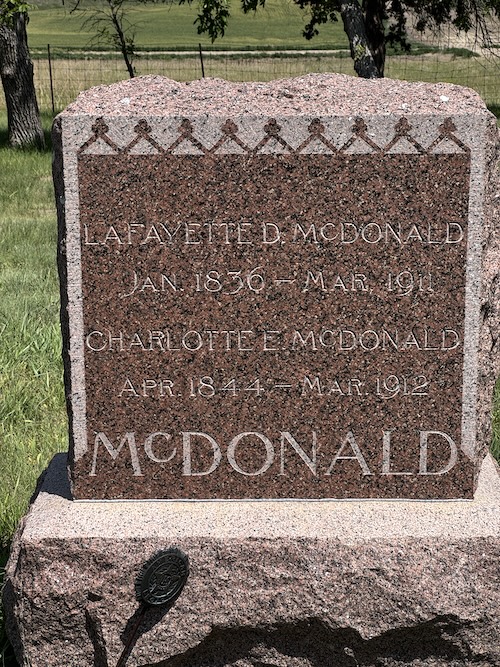
We set out searching for the headstones from the photos on FindAGrave. And I finally saw it – my great-great-great grandmother, Charlotte. I knelt down and thought about the pain she must have gone through. I also thought about my great-great-great grandfather and how his last thoughts were likely of his young wife and the baby he realized he would never meet. His brother, John was in the same conflict but lived nearly two more months at a prison camp in Deval’s Bluff, Arkansas before dying of disease. I imagine John’s thoughts those long weeks were grief for his brother, and for his sister-in-law and for the nephew he would now never meet. And of course, for his own wife, Margaret, sister of Charlotte. So much loss in one family.
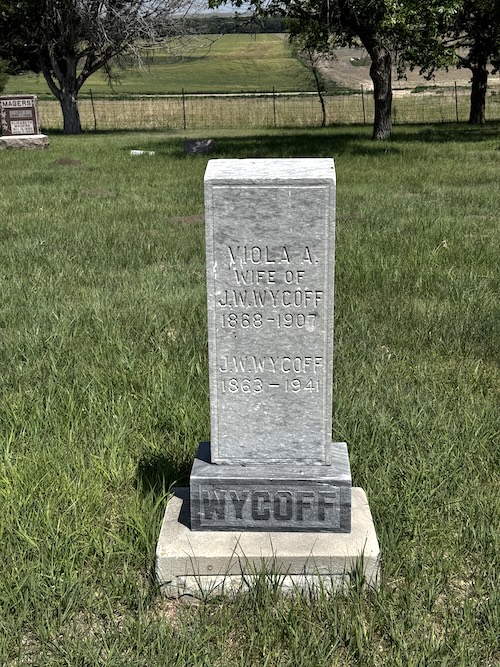
Then I found the son, James’ grave. I felt so sad that he never knew his dad, but glad that his mother had him to help her get through the loss.
Side note: The remains of the two brothers were reinterred at Memphis National Cemetery in Tennessee, as “Unknowns” at some point. I don’t know why they were designated as unknown.
We found some other headstones that we wanted to see, and then we had to make a decision. There were four other cemeteries in the area that I wanted to go to, but we were on a time crunch, and I realized the map showed the roads to those cemeteries were also dirt and would take a while to get to. We decided now was not the time to try to squeeze that all in.
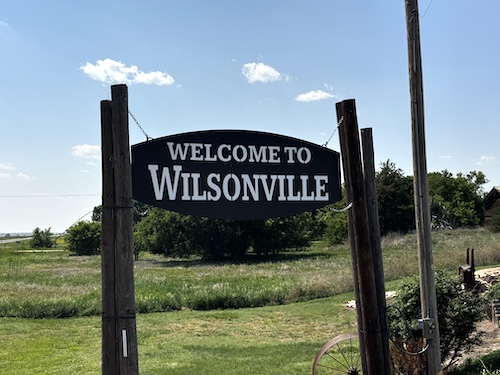
So, we drove along more dirt roads, seeing a few abandoned homes and buildings as we made our way to a paved road that finally led us to Wilsonville, Nebraska – where my mother was born and many of her dad’s family members are buried. Luckily this cemetery is right at the edge of town and was easy to find, as were the headstones I was looking for. I even found a few extended family members to research when I came back home.
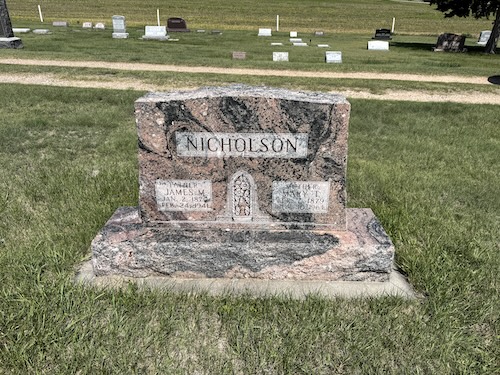
Some family stories can be quite funny. There was one headstone in particular I wanted to find. My aunts told me one time that my uncle didn’t like their dad’s mom – he called her Grandma Pickleshits. I thought that was hilarious. He denies ever saying it, but his sisters insist he did. So yes, I found Grandma Pickleshits’ headstone.
Then we drove around the tiny town where my mom had lived until she was 12. I know she never wanted to leave it. Sadly, it’s in pretty bad shape now, not much left of it. But oh, I wish I had visited it before she died, because now I’d love to ask questions and hear more about her time growing up there.
So, my advice? Take that trip, follow your family stories and your family tree to find the people you’ve heard so much about. They become so much more real when you see their names etched in stone. Their stories come alive and speak to you.
Let your heritage travels take you places that connect to you. Your roots will thank you.


Leave a comment