
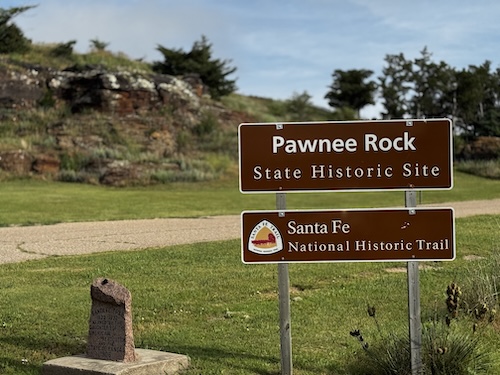
We were traveling along a quiet country road in a nice, comfortable, air-conditioned car, snacks and drinks right by our side. We noticed a tall sandstone outcropping with a sign letting us know that we were approaching Pawnee Rock State Historic Site.
Halfway There
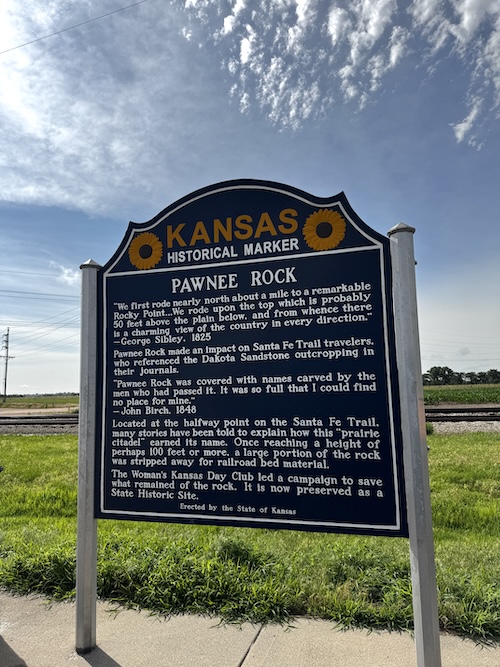
We stepped out in the sweltering Kansas heat to take a look around and find out its significance. There, we learned that it is, indeed, extremely important to the Santa Fe Trail story. This trail ran from Franklin, Missouri, to Santa Fe, New Mexico, and was an important route for commerce until the railroad came along.
If we had been traveling back then, on our horses or in our covered wagon, we would have been very excited to see the rock because it was a physical sign that let us know we were still on the right path and that we were – finally – halfway to Santa Fe.
The View
We would have stopped to rest, eat, and look out over the expanse of the grassy land, maybe spying some bison or other wildlife drinking fresh water down on the Arkansas River. We would have looked back the direction we came; we would have looked forward to where we were going. Would we have felt relief at the distance we had traveled so far? Would we be looking forward to the next half of our adventure, or would we have been questioning our decision by then?
Today, we also stopped to rest, snack, and look out over the expanse of grassy land. We didn’t spy any bison or other wildlife, but we could still see the beauty in every direction, we could still enjoy seeing the river nearby. But – thankfully – we didn’t have to second-guess our decision for this journey, because life has now made it so easy.
Leaving Their Mark
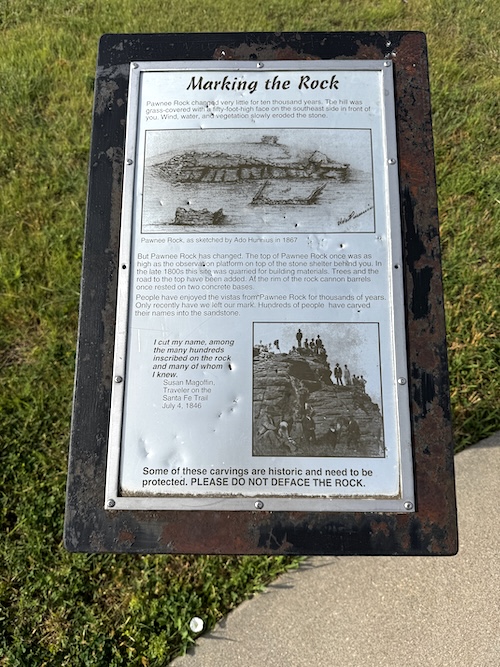
Many travelers left their mark on the rock. What we might consider vandalism today was more of a rite of passage and a record of history in the 1800s. They ask visitors today to please not disturb the marks. They are such an important piece of this story.

An Unexpected Find
A strange sight on the property is the headstone of a Nehemiah Carson. It says his name and “PVT Co G 1 Regt MO MTD INF Mexican War 1826 1846. Apparently, he simply died from an unknown reason, and his company buried him here with great care.

Signs of the Times
Signs tell the story of the geology as well as the people who passed through. One sign tells us that, “You are standing somewhere near the shoreline of a vast shallow sea that occupied this spot millions of years ago.”
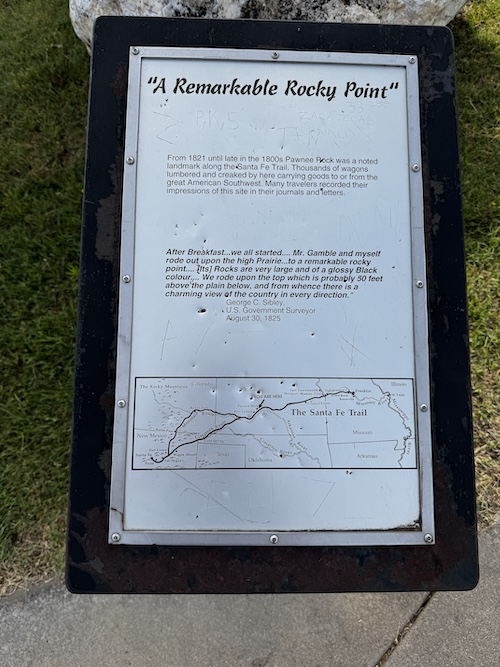
According to another sign, in 1825, George C. Sibley, a U.S. Government Surveyor was pretty impressed with the view, as he wrote, “After Breakfast.…we all started….Mr. Gamble and myself rode out upon the high Prairie…to a remarkable rocky point….[its] Rocks are very large and of a glossy Black colour….We rode upon the top which is probably 50 feet above the plain below, and from whence there is a charming view of the country in every direction.”
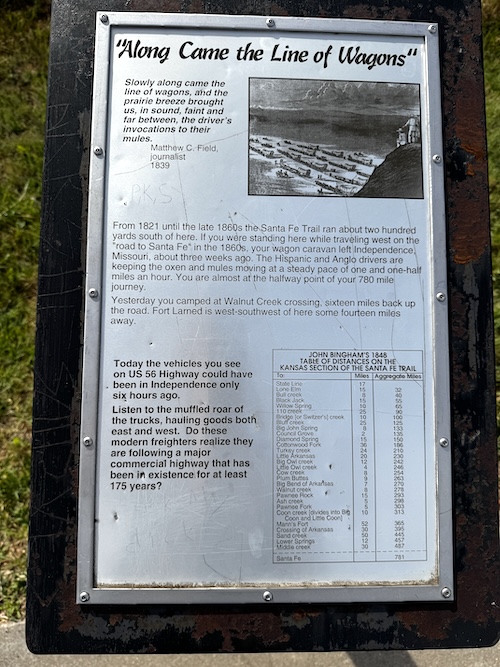
Another sign tells us that if we were standing here in 1860, we would have left Independence, Missouri, about three weeks ago.
Preserving the Rock
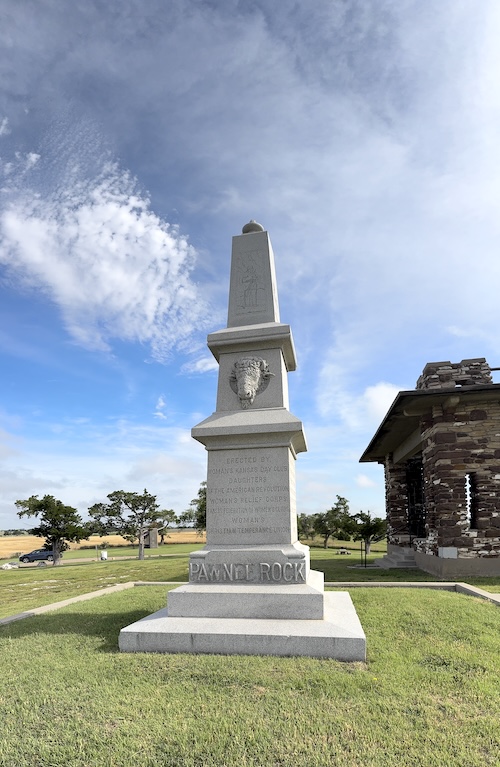
When we look at it today, though, it is 15-20 feet shorter than it was in the 1800s. Over the years since it was a vital landmark for travelers, pieces of it were slowly removed and used elsewhere. Luckily, the owner of the land, Benjamin Unruh, donated the property to the state of Kansas in 1908. Other history lovers – Woman’s Kansas Day Club, Daughters of the American Revolution, Woman’s Relief Corps, Kansas Federation of Women’s Clubs, Woman’s Christian Temperance Union – recognized the importance of saving this property and creating a state historic site status to protect it.

Comfort or Adventure?
When we were through looking around, imagining what the land looked like untouched by modern buildings and people, wondering what we would have carved into the rocks to leave our mark, thinking about our journey today and traveling in their footsteps, we finally climb back into our air-conditioned car with our plethora of snacks and comfort.
We wonder how they could have made that trip, putting up with the heat, the uncertainty of having enough food and water, the knowledge that some sort of danger could lie around every corner. But then we realize, they really didn’t know any different. That was their everyday life, everywhere they went.
While we love history and sometimes wish we were there to experience the adventure, these stories also make us shamelessly appreciative of our modern life, conveniences, and comfort. And sometimes that’s part of the importance of these kinds of monuments – to remind us of all those brave enough to take the hard route to create a comfortable future for us today. Many thanks to them.
What do you think? Do you wish you could have lived back then, going on adventures into the unknown? Or do you prefer modern comforts? Let us know. No judgement, there are no right or wrong thoughts about how you feel.
Pawnee Rock is located on Highway 56, just northeast of Larned, Kansas. It’s free to visit and is open daily from dawn to dusk.



Leave a comment