
Sixty-five thousand years ago is a quite a bit older than we usually write about, but the Waco Mammoth National Monument is such an unusual part of the story of the Waco, Texas area that we can’t help but share it.
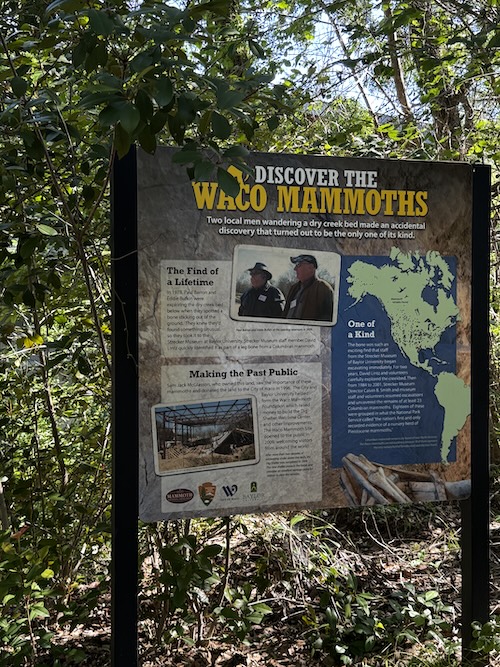
In 1978, two young men were walking in a creek looking for arrowheads and noticed a bone. They thought it might be something significant and dug it out and took it to the experts at Strecker Museum at Baylor University to look at. There, it was confirmed as a Columbian Mammoth femur bone.
Excitement about the find was high, so a team was assembled to begin looking for more finds in the area – and boy, did they find more. Not only were over 25 Columbian Mammoth specimens found, but also a camel, an antelope, and an alligator. Also, there is one single tooth from a saber-toothed cat and one tiny fragment of a giant tortoise. You may wonder how they could tell it was a tortoise if there is only a fragment but Dr. Lindsey Yann, the site Paleontologist, said there are distinctive aspects that only appear in that tortoise.
You may also wonder how there is a camel there – it turns out that camels actually originated in North America, so it’s not a surprise to find one.
The most unique aspect of this discovery is that this is the only place in the entire world where there has been a discovery of a nursery herd of Columbian Mammoths, which means it is entirely comprised of mothers and their babies. No males were in the group. It is estimated they died between 65,000 and 72,000 years ago.
A male has been discovered, however it is at a higher level of the ground than the nursery herd, so it’s estimated he died thousands of years after the herd. He just happened to die in the same place. It’s also interesting that he died in a “belly flop” kind of position, which is unusual, and as of yet, they aren’t sure why he died.
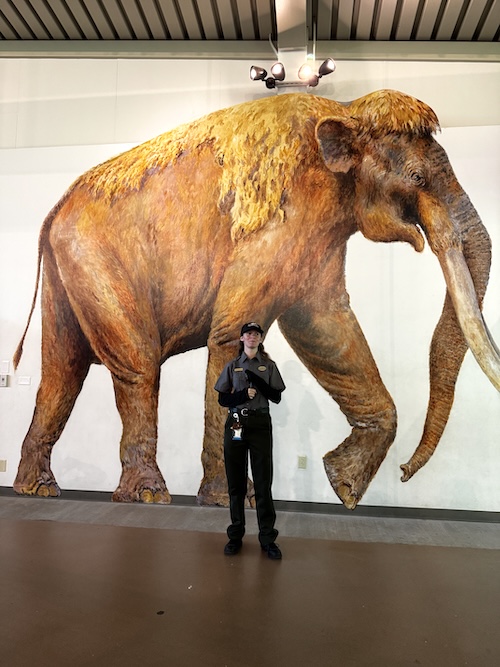
The first theory on how the nursery herd died was that they were caught in a flash flood. But after further, careful review of the bones, they realized they showed signs of poor nutrition and lack of food. Now it is believed the herd came to the area looking for food but finding none, they starved to death.
Recognizing the importance and value of the site, the original owner of the land donated it, and Baylor University and the City of Waco teamed up to support it. The Waco Mammoth Foundation also provides support. In 2015, the site was designated as a National Monument under the National Park system. The site is now 108 acres, and it is expected that there are many more bones on the property as test cores around the site always show more bone fragments.

As most of the bones, except for some sent to the Baylor laboratory, are sitting where they were uncovered, a massive shelter was constructed over the site to keep it safe from the weather. A temperature/humidity system keeps everything climate-controlled to assist in protecting the fragile bones.
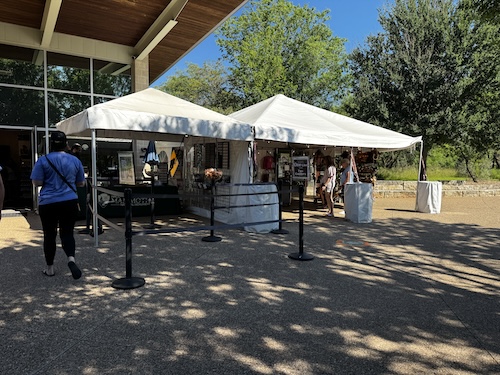
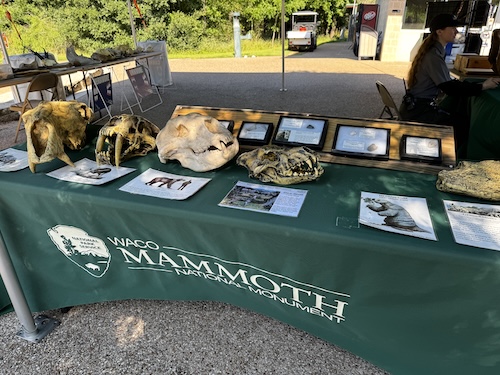
You’ll start your visit at the at the visitor’s center. Outside is a digging area where kids can let out their inner paleontologist and dig toy bones. Under the tent next to the dig area is a display of replica bones where a site ranger will answer all your questions. A building with a small gift shop and restrooms is steps away. This area is all free, and the nature trails through the park are also free.

To go into the dig shelter to see the bones does cost an entry fee. (NOTE: National Park Passes aren’t accepted at National Monument sites).
- Adults 18-61 are $6.00
- Seniors (over 62) are $5.00
- Military is $5.00
- Kids ages 4-17 are $5.00
- 3 and under are fee
Then you’ll gather outside the building to start your tour led by a ranger. They will lead you down a serene, tree-lined 300-foot paved path to the dig shelter, stopping just outside of it at the creek where the first bone was found, while they tell you all about the story.
Then you’ll head inside the comfortable, just-the-right-temperature building to learn more about the finds and see the bones laying in the dirt the way the animals died, and just as they were found. Ask all the questions you want, the rangers happily answer all that they can.

You’ll also see a platform where the paleontologist, interns, and volunteers work to remove old jackets from bones from the original excavation, which have been stored at Baylor for decades. They do this to see exactly what was found back then, to see if the identification is accurate, and then to glue the bone fragments back together for better preservation.
The Waco National Monument is the site of an extraordinary find that was recognized by every party involved, who then created a strong partnership to preserve it and to educate future generations about this unique find for years to come.
The Waco National Monument is located at:
6220 Steinbeck Bend Drive
Waco, TX 76708



Leave a comment